
Despite decades of investment in digital health, one of the most operationally critical areas in healthcare remains largely unmanaged at a system level. This is not due to a lack of innovation. It is because most digital perioperative solutions have failed to align with how surgical care is actually delivered.
From waitlisting through to recovery at home, the perioperative journey is complex, variable, and highly coordinated across teams. Yet, in most health systems, it is still managed through fragmented processes, manual workarounds, and reactive decision-making.
The result is systemic strain.
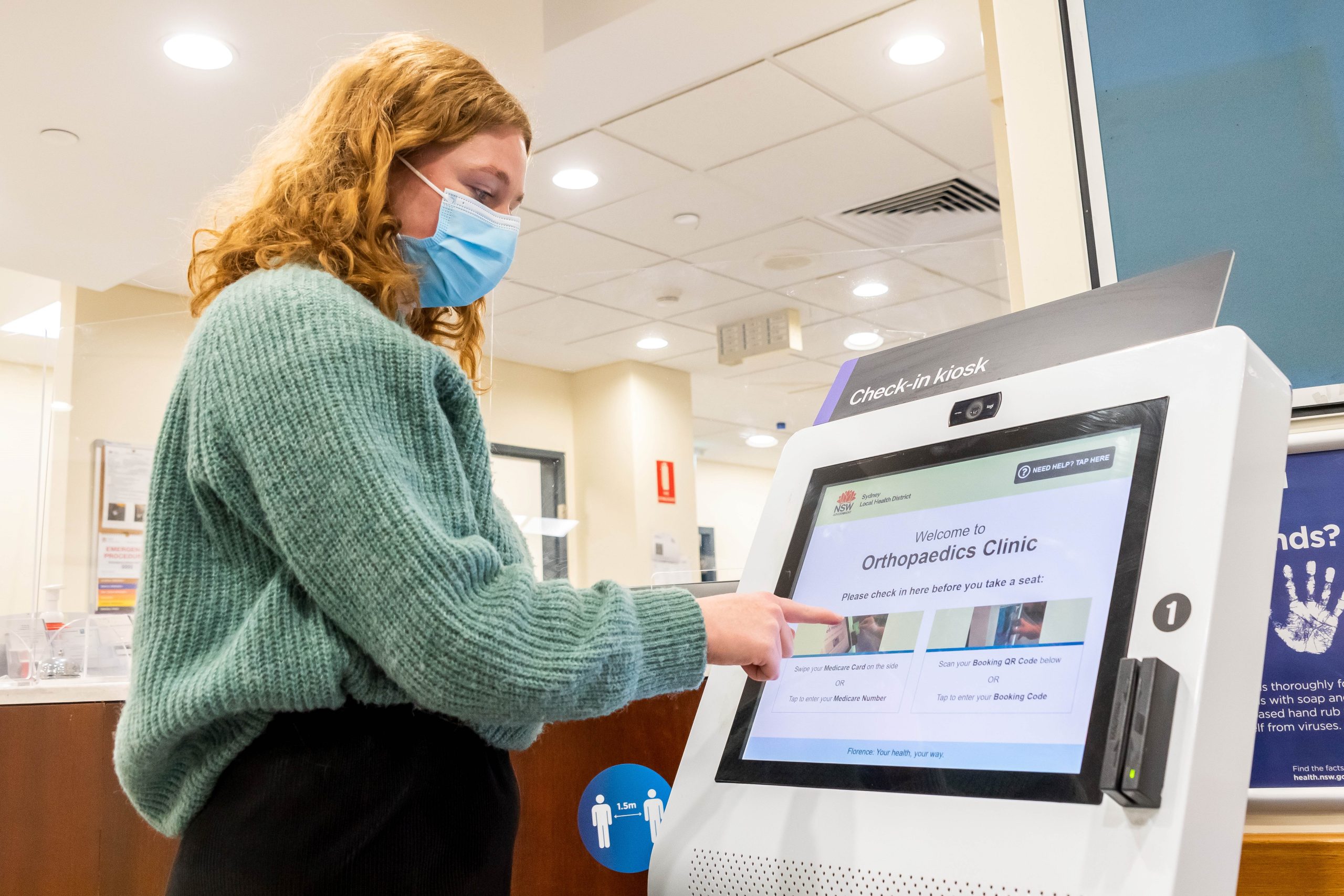
This article explains how digital patient check-in actually works. It walks through the three ways patients can check in, mobile, kiosk and assisted, and shows what the change means for hospital operations. It is written for decision-makers in outpatient, ambulatory care and specialty clinics, including patient experience leads, operations managers and comms teams.
The problem: outdated care models with limited visibility
The healthcare sector is essential, yet widely recognised for being understaffed, overworked, under-resourced, and financially constrained. On top of these challenges, inefficiencies in perioperative workflows exacerbate stress and demand, making surgical care delivery increasingly unsustainable. Outdated care models do not allow for optimal surgery preparation and personalised care provision, which has led to perioperative inefficiencies costing healthcare systems millions annually.
- Surgical cancellations remain a persistent issue, many due to preventable factors
- Patient-initiated cancellations account for a significant proportion of disruption
- Operating theatre time is frequently underutilised, despite being one of the most valuable and constrained resources in healthcare
- Clinicians and administrative teams spend significant time coordinating, chasing, and re-confirming patient readiness
- Delays, complications, and readmissions continue to impact both outcomes and system performance
These are not isolated issues; they are symptoms of a system that lacks continuous visibility of patient readiness, risk, and progression. Without this visibility, healthcare teams are forced into reactive modes of operation, identifying problems too late, intervening under pressure, and relying on manual coordination to keep the system moving.
Despite the clear problem and measurable financial impact, previous digital solutions have still fallen short.
Why previous digital perioperative solutions have failed
Digital perioperative solutions have not failed because the problem is too complex. They have failed because they were not designed for the realities of healthcare delivery. These failures are not random; they are predictable outcomes of misaligned design, rigid implementation models, and a lack of integration into clinical workflows.
1. Poor integration and workflow misalignment
Most hospitals operate within complex, multi-system environments including Electronic Medical Records (eEMRs), referral management systems, scheduling systems and communication tools. Many digital perioperative solutions have been built in isolation, requiring clinicians to step outside their workflows to use them.
Why this matters:
- When integration with existing systems is limited, clinicians are forced to manually enter patient data, increasing workload and errors.
- If data entered is not synchronised in real time across all systems, surgical teams lack the most up-to-date information.
The issue is not just integration; it is workflow misalignment. If a solution does not fit seamlessly into how care is delivered, it creates additional burden rather than reducing it.
2. Clinicians forced to compensate for poor design
Resistance to digital tools is often misunderstood. Clinicians are not resistant to improvement; they are resistant to systems that increase cognitive load and disrupt care delivery. Many past solutions have required clinicians to adapt to the system, rather than the system adapting to clinical reality.
Why this matters:
- Clinicians are forced to create workarounds to bypass system limitations
- Causes duplication of effort across multiple systems and teams
- Gradual disengagement, where trust in the system declines and usage is reduced or abandoned altogether
This pattern is not a failure of users; it is the inevitable result of systems that do not align with real-world clinical workflows.
3. Inability to clearly demonstrate return on investment (ROI)
Hospitals operate under tight financial constraints, making it difficult to secure funding for new technology unless it demonstrates clear and immediate ROI. Demonstrating ROI in the surgical journey is challenging due to the complex interplay of variables including unique patient-specific factors, perioperative workflows, hospital resource allocation, and unanticipated clinical complications, all of which make it difficult to isolate the direct financial impact of a single digital intervention.
Why this matters:
- Hospitals prioritise solutions that directly reduce cancellations and hospital-acquired complications, optimise operating room efficiency, and decrease hospital length of stay.
- When proposing a solution, implementation costs need to be considered, including IT integration, staff training, and ongoing maintenance, all of which make adoption financially challenging.
If a solution does not provide quantifiable financial impact, decision-makers are unlikely to allocate resources.
4. Fragmented, point-solution approaches
Many perioperative solutions only address one segment of the surgical journey, most commonly the postoperative phase. This neglects the critical preoperative period, where most inefficiencies occur.
Why this matters:
- Preoperative education and surgical readiness assessment is the key to reducing cancellations.
- A fragmented approach leads to poor continuity of care.
Optimising a single point in the pathway does not fix a system-level problem. What is required is continuous oversight of the entire journey.
5. Lack of co-design with end users
Too many perioperative solutions have been developed without input from the people who actually use them: clinicians and patients. This lack of co-design leads to poor usability, low adoption, and limited effectiveness.
Why this matters:
- Clinicians understand real-world workflow challenges. If a solution adds complexity rather than simplifying processes, it will not be used.
- Without patient involvement, solutions are based on assumptions rather than how patients actually think, behave, and engage, resulting in tools that are not fit for purpose.
The core issue: lack of visibility across the surgical journey
At the centre of these challenges is a single, critical gap: a lack of real-time visibility across the surgical journey for both clinicians and patients. For clinicians, there is often no clear, continuous view of which patients are truly ready for surgery, which are at risk of cancellation or complication, and which require intervention and when. For patients, there is limited visibility of what they need to do, where they are in their journey, and whether they are on track for surgery. This shared lack of clarity creates uncertainty on both sides of the system.
As a result, teams rely on manual checks and last-minute confirmations, risks are identified too late to act effectively, and coordination becomes reactive rather than proactive. Patients, in turn, miss steps, misunderstand requirements, or disengage due to poorly timed or unclear information. Without visibility, the system defaults to firefighting. With visibility, it becomes possible to anticipate, prioritise, and intervene early, creating a more reliable, efficient, and patient-centred surgical pathway.
Why now is the right time for a digital perioperative breakthrough
Despite previous failures, the conditions for success have fundamentally changed.
Healthcare systems are now operating under sustained pressure, with growing surgical demand, workforce shortages, and increasing expectations around efficiency and patient experience. The global surgical backlog has intensified this challenge, placing urgent focus on reducing cancellations, improving patient flow, and making better use of limited operating theatre capacity. At the same time, there is little tolerance for adding further burden to already stretched clinical teams, creating a clear need for solutions that actively improve how care is delivered.
What has shifted significantly is the broader digital environment. Following the COVID-19 pandemic, healthcare systems have rapidly accelerated their adoption of digital health solutions, including telehealth, remote patient monitoring, and more advanced, workflow-driven technologies. This has changed both the capability of organisations and their openness to digital approaches that support care beyond traditional settings.
In parallel, advances in interoperability have made integration more achievable than ever. Modern standards and maturing digital infrastructure now allow for more seamless connectivity between electronic medical records, scheduling systems, and patient-facing platforms, removing one of the key barriers that limited earlier solutions. There has also been a shift in how healthcare performance is measured and incentivised. With increasing movement towards value-based care, health systems are more directly accountable for outcomes such as cancellations, complications, and overall patient experience. This creates stronger alignment between clinical improvement and financial performance, making investing in effective perioperative solutions more justifiable.
Importantly, there is growing recognition that many perioperative challenges are not due to lack of effort, but lack of system-level visibility and coordination. This creates an opportunity to move beyond fragmented, reactive models of care and towards more proactive, pathway-driven approaches.
The convergence of these factors means that digital perioperative solutions are no longer early-stage concepts. The capability, need, and readiness now exist simultaneously. The opportunity is no longer to introduce more technology into the system, but to use it to fundamentally redesign how the surgical journey is managed.
What a successful digital perioperative solution must deliver
For digital perioperative transformation to succeed, solutions must address the root causes of inefficiency and align with the realities of healthcare delivery. This requires a shift away from isolated tools and towards systems that actively support the entire surgical journey.
First, a successful solution must provide end-to-end orchestration of the perioperative pathway. This means managing the patient journey from waitlisting through to recovery, ensuring continuity across all phases of care rather than focusing on isolated moments within the pathway.
Second, it must deliver real-time visibility of patient readiness, risk, and progression for both clinicians and patients. Clinicians need to clearly see who is ready, who is at risk, and where intervention is required. Patients need to understand what they need to do, when to do it, and whether they are on track. This shared visibility is what enables proactive, rather than reactive, care.
Third, the solution must be configurable to reflect clinical reality. Healthcare is inherently variable across hospitals, specialties, and individual clinicians. A rigid, one-size-fits-all system will not work in practice. Solutions must be adaptable to local workflows while maintaining consistency in outcomes.
Fourth, automation must be embedded in a way that reduces workload, not adds to it. This includes automating education, reminders, and progression tracking, while surfacing risks and required actions without creating additional administrative burden. The goal is to remove the need for manual coordination, not digitise it.
Finally, the solution must demonstrate clear and attributable operational impact. This includes measurable improvements in areas such as cancellations, theatre utilisation, patient flow, and administrative efficiency. Without this, adoption at scale will remain limited.
A successful digital perioperative solution is not defined by the technology it uses, but by how effectively it enables visibility, coordination, and proactive management of the surgical journey for its users.
Frequently Asked Questions
What are digital perioperative solutions?
Digital perioperative solutions are software platforms that support the surgical journey from waitlisting through preparation, surgery and recovery. They give clinicians real-time visibility of patient readiness and risk, and give patients clear guidance on what to do and when. The aim is to replace manual coordination and fragmented processes with a connected, proactive view of the entire pathway.
Why have digital perioperative solutions struggled in the past?
Past solutions did not fail because the problem was too complex. They struggled because they were not designed for how surgical care is delivered. Common reasons include poor integration with hospital systems, designs that increased clinician workload, difficulty proving ROI, fragmented point-solutions that only covered part of the journey, and a lack of co-design with the clinicians and patients who use them.
What causes surgery cancellations?
Cancellations stem from several factors, many of them preventable. Patients may not be adequately prepared or assessed before surgery, readiness may not be confirmed in time, and patient-initiated cancellations account for a significant share of disruption. Underlying most of these is a lack of continuous visibility of patient readiness and risk, which forces teams into reactive, last-minute coordination.
How do digital perioperative solutions integrate with hospital systems?
Modern platforms are designed to work alongside core hospital systems such as PAS, EMR and scheduling tools, connecting through APIs or secure data exchange rather than replacing them. Improved interoperability standards now make this integration more achievable, allowing patient readiness, communications and workflow coordination to sit around existing clinical systems instead of forcing clinicians to work outside their normal tools.
What should a successful digital perioperative solution deliver?
A strong solution provides end-to-end orchestration of the pathway, from waitlisting to recovery. It delivers real-time visibility of readiness, risk and progression for clinicians and patients, adapts to local clinical workflows, and embeds automation that reduces admin rather than adding to it. Most importantly, it shows clear, attributable impact on measures such as cancellations, theatre utilisation and patient flow.
Now is the time to rethink the surgical journey
The opportunity to transform perioperative care is no longer theoretical; it is achievable.
Healthcare organisations that move beyond fragmented systems and embrace journey-level visibility and coordination will be better positioned to improve surgical reliability, reduce avoidable inefficiencies, and deliver a more consistent experience for both patients and clinicians.
The question is no longer whether change is needed, but how quickly organisations are willing to act. Now is the time to rethink how the surgical journey is managed, not as a series of disconnected events, but as a coordinated pathway that can be actively guided, monitored, and improved.
Those who take this step will not only respond to current system pressures; they will help define the future standard of surgical care.
Five Faces supports the full surgical journey, from pre-admission through to recovery, on one configurable platform. Request a demo to see how, or read the Supporting Every Step white paper on reimagining perioperative care.